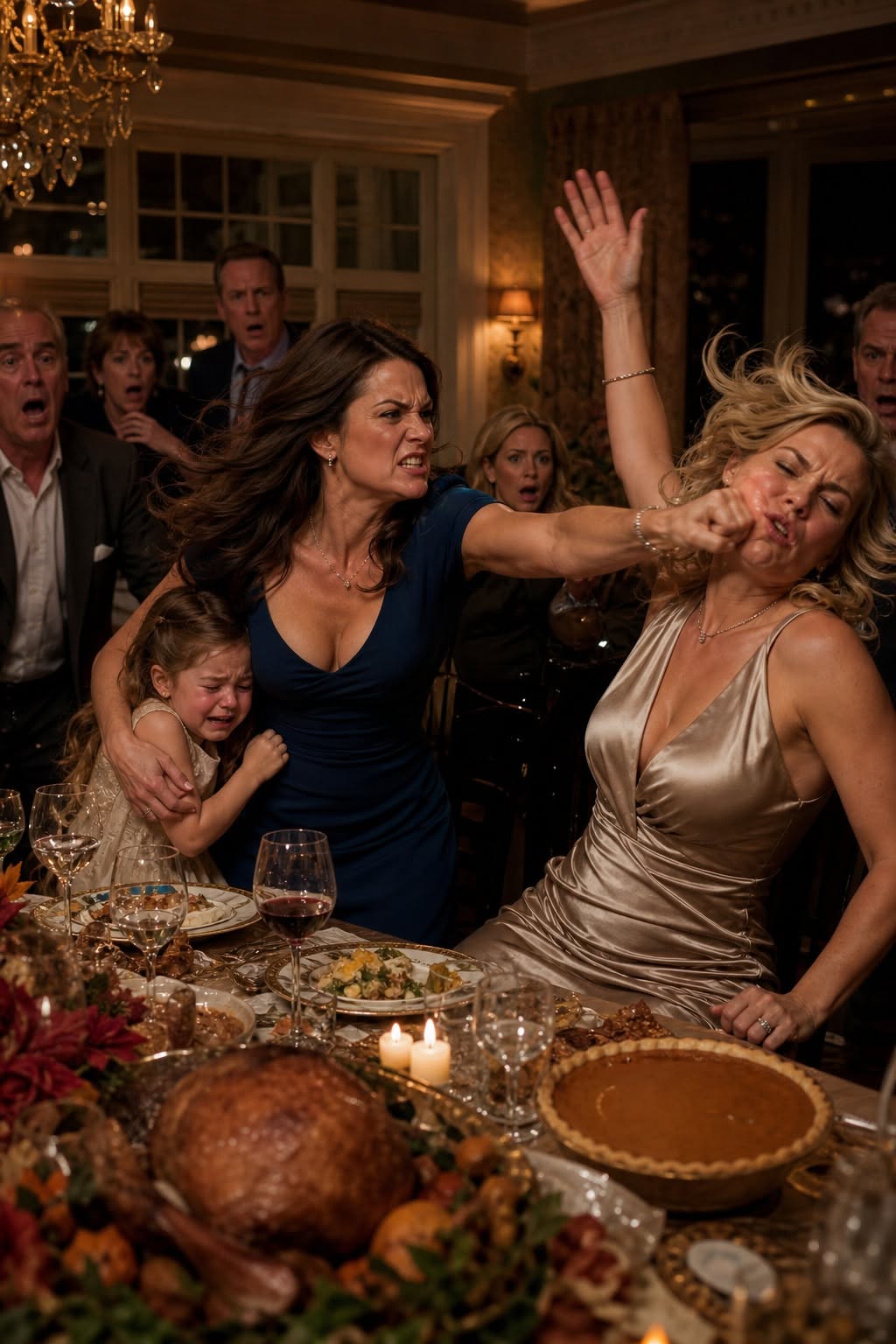
 Meine Mutter demütigte meine Frau am ersten Geburtstag unseres Sohnes, indem sie sie zwang, alle zu bedienen und gleichzeitig unser krankes Baby zu versorgen.
Aber sie hatte nie damit gerechnet, dass ich durch diese Hintertür kommen würde…
Meine eigene Mutter hat den ersten Geburtstag meines Sohnes zu einem Albtraum gemacht.
Sie demütigte meine Frau vor zwanzig Verwandten, zwang sie, alle zu bedienen, während sie sich um unser krankes Baby kümmerte, und behandelte sie in ihrem eigenen Haus wie eine Dienerin.
Ich ging hinein und erwartete eine Familienfeier.
Stattdessen entdeckte ich einen grausamen Plan, der darauf abzielte, die Kontrolle über mein Haus, mein Geld und alles, wofür ich gearbeitet hatte, zu erlangen.
„In diesem Haus bestimme ich die Regeln. Deine Frau taugt nur zum Kinderkriegen und Geschirrspülen.“
Diese Worte ließen mich wie erstarrt zurück, als ich gerade vor meinem Garten in Nashville stand und meiner Mutter Teresa zuhörte, wie sie von der Party prahlte, die sie in meinem Haus veranstaltet hatte.
Mein Name ist Connor Bradley, und ich bin Bauingenieur.
An jenem Freitag feierte mein Sohn Frederick seinen ersten Geburtstag, und ich hatte die Arbeit früher verlassen, weil ich meine Frau Amy überraschen wollte.
Ich trug eine Geburtstagstorte, einen kleinen Anhänger mit dem Buchstaben „F“ für meinen Sohn und das blaue Kleid bei mir, das Amy online bewundert, aber nie für sich selbst gekauft hatte.
Monatelang hatte ich meiner Mutter jeden Monat dreitausend Dollar geschickt, weil sie behauptete, Amy nach Fredericks Geburt mit Lebensmitteln, Rechnungen und dem Baby zu helfen.
Ich habe ihr vertraut.
Bis ich die Hintertür öffnete.
Mein Haus war voller Verwandter.
Es gab teure Meeresfrüchte, Flaschen mit Spirituosen, Dekorationen und Berge von Lebensmitteln, die ich nie abgesegnet hatte.
Meine Mutter stand stolz in einem brandneuen Kleid da und erzählte es allen.
„Mein Sohn arbeitet hart. Er gibt mir das Geld, weil er mir vertraut, dass ich für diese Familie sorge.“
Dann fragte jemand, wo Amy sei.
Meine Tante Betsy lachte.
„Sie ist in der Küche. Ich habe ihr gesagt, sie soll alles vorbereiten. Eine finanziell unabhängige Frau sollte sich ihren Platz verdienen.“
Mir stockte der Atem.
Ich ging hinein und fand meine Frau auf einem billigen Plastikhocker sitzend vor, umgeben von schmutzigem Geschirr, fettigen Pfannen und halb leeren Serviertabletts.
Sie hielt unser fieberndes Baby auf dem einen Arm, während sie mit dem anderen das Geschirr schrubbte.
Sie sah erschöpft aus.
Hungrig.
Völlig kaputt.
In dem Moment, als sie mich sah, fiel ihr das Stück Brot, das sie gerade aß, aus dem Mund.
„Connor … deine Mutter hat gesagt, ich darf noch nicht aufhören. Ich muss noch den Kaffee servieren.“
Ich nahm Frederick aus ihren Armen.
In dem Moment, als ich seine Stirn berührte, spürte ich, wie heiß er war.
„Wir gehen“, sagte ich.
Amy blickte sofort in Richtung Garten.
Ihre Augen spiegelten Angst wider.
„Sie wird wütend sein.“
Diese Worte verletzten mich mehr als alles, was meine Mutter je gesagt hatte.
My own wife was afraid inside our home.
I got Amy and Frederick into the car and called 911.
I told the dispatcher that my relatives were inside my home without my permission, that my wife had been pressured into working while caring for our sick child, and that I was afraid something even more serious was happening.
Minutes later, the police arrived.
My mother started screaming.
She shoved an officer and insisted that the house belonged to her.
Then my cousin Mason suddenly tried to slip out through the side gate carrying a folder he had been hiding.
The police stopped him.
When they opened it, everyone went silent.
Inside was the original deed to my house.
As my mother was placed in handcuffs, still screaming insults at Amy, I finally understood the truth.
That birthday party had never been about celebrating my son.
It was only the first step in a plan to steal everything we owned.
The red and blue flashing lights of three patrol cars painted the walls of our Nashville neighborhood in a frantic, strobe-like rhythm.
The quiet Friday evening was shattered by the shrill wail of sirens that had brought neighbors out onto their front porches, whispering behind cupped hands. Inside the house, the noise was different.
It was the volatile, heavy sound of a reckoning. My mother, Teresa, was still shouting oaths at the top of her lungs, her voice hoarse and jagged as two police officers guided her toward the rear cruiser. She twisted in their grip, her eyes locked on me with a venom so pure it felt physical.
“You’re throwing away your own blood for this worthless outsider, Connor!” she screamed, her nails clawing at the cool metal of the squad car door before they pushed her inside. “I raised you! I built you! And this is how you repay me? You’ll be begging for me to come back before the month is out!”
The heavy thud of the cruiser door muffled her voice into an angry drone. Around her, my relatives—people who had eaten my food, drank my liquor, and nodded along with my mother’s cruelty—were scattering like roaches when the kitchen light snaps on. Aunt Betsy was trying to sneak her designer handbag past an officer at the front gate, while Uncle Ray muttered apologies into his phone, pretending he had nothing to do with the takeover of my property.
I stood on the front lawn, the crisp night air biting through my shirt. In my arms, little Frederick let out a soft, wheezing cough, his tiny body radiating heat against my chest. Amy stood beside me, shivering despite the light cardigan she had thrown over her shoulders. Her face was pale, tear streaks cutting clean tracks through the kitchen soot and sweat on her cheeks. She was holding onto my sleeve so tightly her knuckles were white, as if she were afraid that if she let go, the nightmare would resume and she would find herself back on that plastic stool in the kitchen.
“We’re safe now, Amy,” I whispered, pressing a kiss into her soft hair. “It’s over. They’re gone.”
“Is she really gone, Connor?” Amy’s voice was barely a breath, trembling with a terror that ran deeper than the events of the evening. “The deed… Connor, she had the original deed. If the police hadn’t caught Mason… we wouldn’t even own the roof over our heads anymore.”
That was when the cold realization settled into my bones. The deed. The police had stopped Mason at the side gate, but the folder he had been clutching contained far more than just a piece of heavy parchment paper transfer of ownership. As the senior officer, a weathered sergeant named Miller, handed the manila folder back to me, his expression had been grim.
“Mr. Bradley,” Sergeant Miller had said, lowering his voice so the departing relatives wouldn’t hear. “You might want to look at what else is in here. This isn’t just a property dispute. This looks like a pre-signed quitclaim deed, a power of attorney, and several bank transfer authorizations bearing signatures that don’t quite match yours or your wife’s.”
Now, standing in the sudden, eerie quiet of our ransacked living room, I opened that folder on the dining table. The party decorations—cheap silver streamers and a banner that read “Our Family First”—mocked us from the walls. Frederick had finally drifted into an exhausted, feverish sleep, and I had laid him carefully in his crib in the nursery, with Amy sitting vigil by his side with a cool damp cloth.
I sat down alone at the head of the table, the brass lamp casting long, distorted shadows across the papers.
The first document was indeed the original grant deed to the house. I had purchased this property two years before meeting Amy, pouring every dime of my savings as a senior structural engineer into its foundation. When my father passed away five years ago, leaving my mother with mounting debts and no pension, I had made the fatal mistake of letting her keep a duplicate key “for emergencies.” I had even added her name to a secondary emergency access form at the county recorder’s office during a period when I was traveling heavily for a major bridge project in Memphis—a temporary convenience that she had clearly manipulated into something permanent.
But it was the second document that made my breath catch in my throat.
It was a bank statement from First Tennessee National Bank, dated just three days ago. For the past twelve months, I had been wiring three thousand dollars every month into what I believed was a joint household account managed by my mother to help Amy with groceries, medical bills, and infant supplies while I worked sixty-hour weeks. According to this statement, however, that account didn’t belong to my mother.
It belonged to a trust fund.
A private, irrevocable family trust named The Teresa Bradley Legacy Trust. And the sole beneficiary listed on the account, with full authority to liquidate, transfer, and assign assets, was not my mother.
It was my cousin Mason.
My blood ran cold. Mason hadn’t held a steady job since we were in our early twenties. He spent his days drifting between car dealerships and local bars, always broke, always talking about his “big break” just around the corner. Yet, over the past year, Mason had somehow managed to purchase a brand-new Ford F-150, expensive designer clothes, and—as I remembered from a casual conversation last month—put down a deposit on a commercial warehouse down by the river.
With my money. With the money I earned breaking my back on construction sites, breathing concrete dust, and sacrificing precious time with my wife and newborn son.
I flipped the page, my hands shaking with a rage so intense it felt cold. Beneath the bank statements were handwritten notes—dozens of pages covered in my mother’s sharp, spidery handwriting. They were outlines, timelines, and legal strategies.
They weren’t just planning to steal the house. They were planning to institutionalize Amy.
A chill crawled up my spine as I read a specific paragraph circled in red ink: “Once the property is transferred under the incapacity clause, the wife’s postpartum instability can be legally documented through compliant medical affidavits. Teresa assumes guardianship of the minor child, Frederick. Connor’s income redirected entirely to the trust for family preservation.”
They had mapped out our lives like a corporate takeover. Every detail of Amy’s exhaustion, her quiet nature, her isolation since moving to Nashville, had been weaponized against her. My mother hadn’t just been insulting her in the kitchen; she had been building a systematic case to prove that Amy was an unfit mother, using my long work hours as proof that I was an “absentee provider” who needed his mother to manage his affairs.
And tonight—this grand birthday party—was supposed to be the coronation. They were going to get me drunk on the expensive liquor they had brought, have me sign what they claimed were “routine tax adjustments for the property tax exemption,” and seal our doom before the cake was even cut.
If I hadn’t come home early… if I hadn’t walked through that back door and seen my wife scrubbing pans with a sick baby in her arms… we would have lost everything. Our home, our child, our dignity, and our future.
My phone buzzed on the wooden table, breaking the heavy silence.
It was an unknown number, but the area code was local. I stared at the screen for a moment before pressing accept and bringing the phone to my ear.
“Connor Bradley?” a smooth, unfamiliar voice asked. There was a faint background hum, like the atmosphere of a high-end hotel lobby or a late-night corporate office.
“Who is this?” I demanded, my voice sharp.
May you like
„Das spielt jetzt keine Rolle, Mr. Bradley“, erwiderte der Anrufer gelassen, ein Anflug von Belustigung in der Stimme. „Wichtig ist, dass Sie Dokumente vor sich haben, die nur an der Oberfläche dessen kratzen, was Ihre Mutter und Ihr Cousin in den letzten drei Jahren hinter Ihrem Rücken getrieben haben. Wenn Sie wissen wollen, warum Mason nicht nur zu Ihrer Haustür einen Schlüssel hat … und warum der Tod Ihres Vaters nicht ganz so ein Unfall war, wie der Gerichtsmediziner behauptet … dann müssen Sie mich in zwanzig Minuten im Diner an der Interstate 40 treffen. Kommen Sie allein.“
Die Leitung wurde mit einem scharfen Klicken unterbrochen, und ich saß inmitten des Chaos von der Feier zum ersten Geburtstag meines Sohnes und starrte auf die Papiere, die bewiesen, dass mein ganzes Leben auf einem Fundament aus Lügen aufgebaut war.
Aktie
Ähnliche Artikel
Weitere Beiträge
Der Rest dieses Artikels ist gesperrt.
Sehen Sie sich eine kurze Werbung an, um den Download freizuschalten und weiterzulesen.