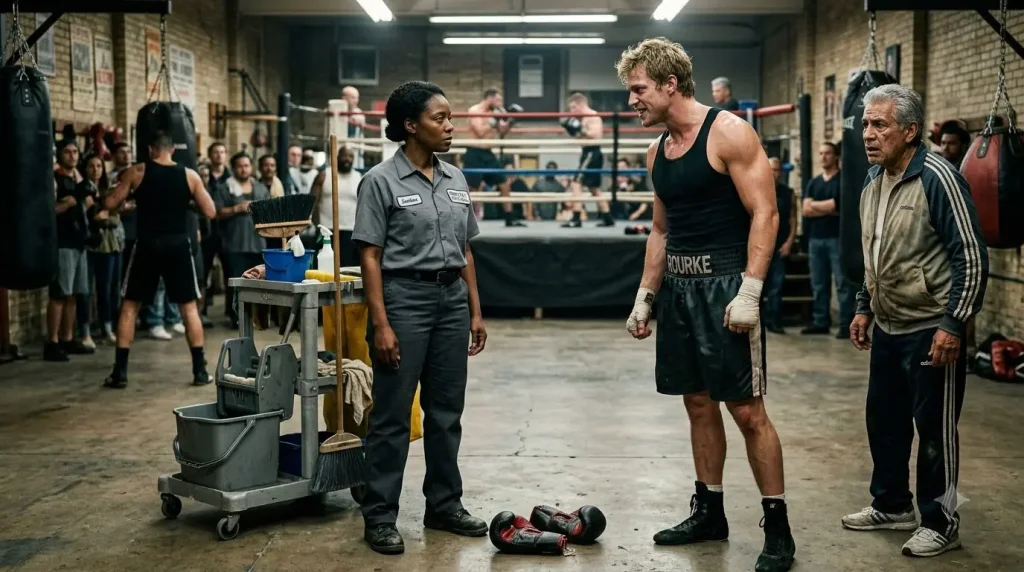
The fight had taken place in 2012. Nadine Bell defended a regional title against Elena “Lena” Ortiz, a veteran from New Mexico. In the ninth round, after what reports described as a competitive fight, Ortiz took a combination near the ropes and fell backward. Her head struck the canvas. She was conscious at first, then deteriorated in the locker room.
She underwent emergency surgery for a brain bleed.
She survived.
But she never fought again.
Neither did Nadine.
The articles after that became messy. Questions about whether the bout should have been stopped earlier. Questions about medical checks. Quotes from promoters, doctors, and officials. One piece said Nadine had ignored reporters after visiting Ortiz in the hospital. Another said she had withdrawn from a scheduled world-title eliminator.
Then she disappeared from boxing coverage.
Trent leaned closer to the laptop.
“Dude.”
Mason said nothing.
“She was nineteen and oh.”
“I can read.”
“You threw gloves at her.”
Mason shut the laptop.
“She still walked away.”
Trent stared at him.
“Yeah. Maybe because she almost killed somebody.”
“It was a fight.”
“You think that makes it easier?”
Mason stood.
“Don’t post any of this.”
Trent blinked. “Seriously?”
“I said don’t post it.”
For once, Trent did not argue.
But Mason’s discovery did not stay private.
Not because Trent leaked it.
Because the internet had already started digging.
By Tuesday evening, an account devoted to women’s boxing history posted the old title photo beside a screenshot from the janitor video.
The caption read: Is that former unbeaten contender Nadine Bell working maintenance at North Harbor?
Within hours, the answer was yes.
By Wednesday, reporters began calling the gym.
Victor unplugged the front desk phone after lunch.
“This is why I don’t trust free publicity,” he muttered.
Nadine stood beside the desk with her arms folded.
“You knew this would happen.”
“I knew Mason was stupid. I didn’t know the whole internet wanted to major in archaeology.”
She looked toward the windows. Two people with cameras stood across the street near the tire shop.
“I can’t work like this.”
“Take a few days.”
“I don’t want a few days.”
“Then let me close the blinds.”
“That won’t stop them.”
Victor’s expression softened.
“You don’t have to explain yourself to anybody.”
“I know.”
“Do you?”
Nadine looked at him.
He tapped the desk with two fingers.
“Because for fourteen years you’ve acted like surviving that night was something you needed to apologize for.”
Her face closed.
“Don’t.”
“I’m not saying it was nothing.”
“Then don’t say anything.”
“Lena survived, Nadine. She built a life.”
“I know exactly what she built.”
Victor paused.
That answer surprised him.
“You still talk to her?”
Nadine looked away.
“Sometimes.”
“You never told me.”
“It wasn’t yours to know.”
The front door opened.
Mason walked in alone.
No Trent. No speaker. No sunglasses.
He stopped when he saw them.
Nadine’s body went rigid.
Mason raised both hands slightly.
“I didn’t post it.”
“Congratulations,” she said. “You met the minimum standard for being decent.”
“I found it yesterday. The internet found it after.”
Victor looked between them. “This is not the time.”
Mason nodded. “I know. I just wanted to say I didn’t send anything out.”
Nadine picked up her keys.
“You sent enough out already.”
“I know.”
She stopped.
It was the first time he had said those words without defending himself immediately after.
Mason looked at her work shirt, then at the floor.
“I’m sorry about the first video. And Saturday.”
Nadine said nothing.
“I thought you were…”
“What?”
He struggled.
“I don’t know. Acting like you knew more than you did.”
“Because of my clothes.”
Mason looked up.
There it was.
The truth he could not step around.
“Partly.”
“Mostly.”
He swallowed. “Yeah. Mostly.”
Nadine nodded once.
“Good.”
“Good?”
“Now at least you know what you’re apologizing for.”
She walked toward the back hall.
Mason followed two steps, then stopped himself.
“Can I ask one thing?”
Nadine turned.
“You already are.”
“Were you really going to fight me if I kept pushing?”
Victor covered his face with one hand.
Nadine stared at Mason.
Then, unexpectedly, she laughed.
Not loudly. Not warmly. Just one short sound of disbelief.
“You still think that’s the interesting question.”
Mason’s ears turned red.
“I was just asking.”
“Ask a better one.”
She disappeared into the hallway.
Mason looked at Victor.
“What’s the better question?”
Victor leaned back in his chair.
“Why somebody who loved boxing enough to give her whole life to it wouldn’t put gloves on for fourteen years.”
Mason’s expression changed.
“I know why.”
“No,” Victor said. “You read why. That’s different.”
For the next week, North Harbor existed under a strange kind of siege.
Reporters came and went. Old fight fans showed up pretending to need memberships. Two sports podcasts offered Nadine money for interviews. A streaming company emailed Victor about a documentary short. A promoter in Las Vegas called three times asking if Nadine would consider an exhibition bout against another retired fighter.
She refused everything.
What bothered her most was not the attention.
It was the story people told with it.
Former champion falls on hard times, now works as janitor.
Unbeaten boxer disappears, found cleaning gym.
From title belts to toilet brushes.
Every headline assumed the same thing: that maintenance work was evidence of tragedy.
Nadine had taken the North Harbor job because she needed structure after years of drifting. Then she stayed because she liked fixing things that could actually be fixed. A clogged drain had a cause. A broken latch had a replacement part. A stained floor responded to effort. There was comfort in problems that did not ask moral questions.
She had other options. She had turned down commentary work, seminars, and small promotional jobs. She lived modestly, but not desperately. She had invested most of her fight earnings before retiring and had inherited her mother’s duplex after she died.
Cleaning was not where life had thrown Nadine.





