The diesel engine roared to life on the first crank. The voltage meter on the dashboard immediately pegged to a healthy 14 volts. The new alternator hummed underneath the floorboards—a steady, even mechanical vibration.
Clayton sat there for a long moment, listening to the rhythmic chug of the engine. He looked out through the dusty windshield at the 30 acres of golden wheat swaying in the rising wind. He reached down, put the combine into gear, and drove out into the field.
The work was waiting. It always was.
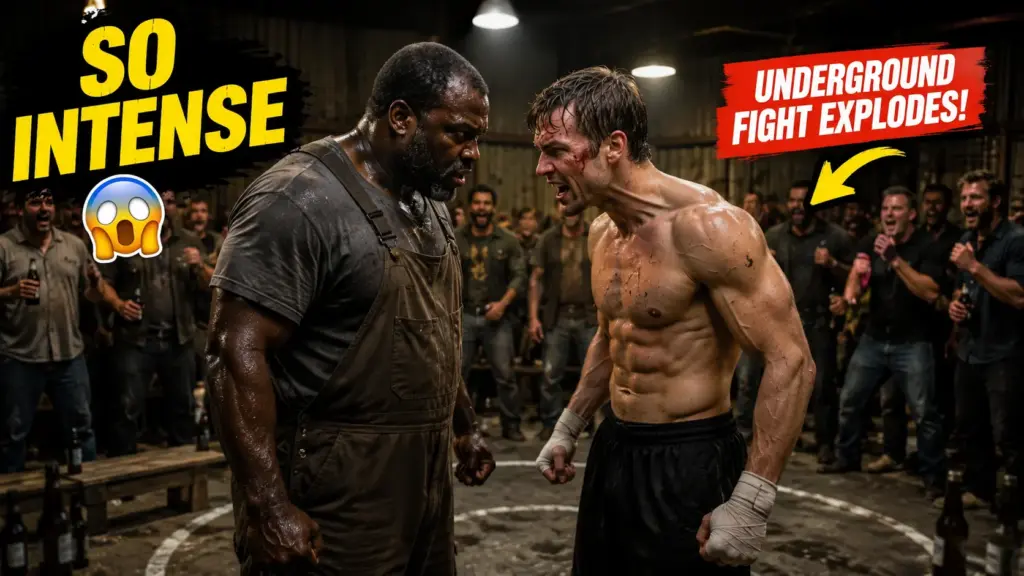
The crowd parted with a low murmur of confusion as Clayton stepped off the sticky floor and approached the edge of the mats. He didn’t vault over the makeshift rope barrier. He didn’t puff out his chest. He awkwardly lifted one leg over the rope, then the other, looking like a man stepping over a low fence to check on a stray calf.
Trent stopped his shadowboxing. He dropped his hands to his hips, a smirk cutting across his face. He looked Clayton up and down—the muddy boots, the oil-stained shirt, the slight stoop in his posture.
“You lost, old man?” Trent asked. The crowd snickered.
“I heard 500,” Clayton said. His voice barely carried over the whir of the industrial fans. He didn’t look Trent in the eye. He looked at the duct tape holding the blue mats together. It was peeling at the corners.
“You got a death wish, farmer?” Trent laughed, stepping closer. He invaded Clayton’s personal space, trying to force eye contact. Up close, Trent smelled like spearmint gum and raw adrenaline. His pupils were blown wide. “I hit hard. I’m not going to go easy on you just because you got dirt on your jeans.”
Clayton slowly reached down and untied his work boots. He pulled them off, placing them neatly outside the ring. He peeled off his thick wool socks next. His bare feet stepped onto the mats. They were pale, scarred with thick calluses built up from years of walking on uneven furrows.
“Just ring the bell, Trent,” Clayton said mildly.
Rusty walked to the edge of the mat holding a thick wad of bills. He looked at Clayton with genuine pity. “All right. 3 minutes. You go limp, you tap, or you don’t get up, it’s over. No eye gouging, no biting.”
“Easy money,” Trent announced to the room, raising his taped hands. He bounced from foot to foot, his breathing hissing through his teeth in sharp, rhythmic bursts.
Rusty chopped his hand down. Trent closed the distance instantly. He didn’t respect Clayton, which meant he didn’t bother with a feeler jab. He threw a heavy looping overhand right, aiming to end it in 3 seconds.
Clayton didn’t slip with the graceful fluidity of a boxer. He simply hunched his shoulders and tucked his chin—a brutal, pragmatic movement. Trent’s fist crashed into Clayton’s forehead, the thickest, hardest bone in the human skull. A sickening crack echoed. Trent winced, stumbling back a half step, shaking his right hand. He had aimed for the jaw and hit solid bone.
Clayton felt a flash of white light behind his eyes. A dull, sickening wave of nausea rolled through his stomach. It hurt. It hurt badly. He wasn’t invincible. He was 38 years old. His knees ached from the damp, and his lower back was a constant knot of pain. He tasted the sharp, metallic tang of blood where he had bitten the inside of his cheek.
“Stay small,” a cold, dead voice whispered in his mind. The voice he hadn’t heard since the dusty streets of Al Anbar. “Let him work. Watch his hips.”
Trent, angered by his own mistake, unleashed a flurry. A jab snapped Clayton’s head back. A vicious low kick slammed into Clayton’s left thigh. The sound of flesh on flesh—a wet, heavy thwack—made a woman in the front row gasp. Clayton stumbled, his leg buckling slightly.
“Come on, dirt boy,” Trent spat, smelling blood. He threw a high roundhouse kick, aiming for Clayton’s temple.
Clayton’s reaction was entirely devoid of grace. It was ugly, born of survival rather than sport. He didn’t try to block the kick—he stepped into it. He lunged forward, closing the space before the leg could generate full momentum. Trent’s shin slapped harmlessly against Clayton’s ribs, wrapping around his back. With Trent balanced on one leg, his momentum compromised, Clayton just leaned his weight forward and shoved. It was a clumsy, heavy push. Trent crashed backward onto the foam mats, his breath leaving him in a loud oof.
The crowd fell dead silent. The jukebox in the corner seemed to suddenly blare louder, a tinny country song mocking the tension. Trent scrambled to his feet, his face flushing crimson. The smirk was gone, replaced by a tight, furious grimace. He felt humiliated. A dirt-poor farmer had just dumped him on his back.
Clayton stood exactly where he had been. He wiped a streak of blood from the corner of his mouth with the back of his greasy thumb. He looked at the red smear on his skin. He felt the heavy, rhythmic thumping of his heart in his chest. He didn’t want to be here. He hated the adrenaline flooding his veins. It felt like poison.
“You’re dead!” Trent hissed, shifting his stance. He dropped his hands slightly, preparing for a takedown. He was going to take the farmer to the ground, mount him, and cave his face in.
Clayton sighed—a short, ragged breath that smelled of stale beer and copper. He rolled his shoulders, feeling the joints pop. He stopped trying to look small. He squared his hips. His stance shifted from the awkward slouch of a tired farmer to a grounded, perfectly balanced base. He didn’t raise his fists like a boxer—he kept his hands low, open, relaxed.