He looked monstrous.
The internet had reduced several years of training into ten bad seconds.
That felt unfair.
It also happened to be ten seconds he had actually created.
That distinction became difficult to avoid.
Dr. Elena Moore worked with Harbor Point’s competitive team.
Evan was required to meet her.
First session, he said:
“I know what I did.”
Elena answered:
“Tell me.”
“I held too long.”
She waited.
“That’s it.”
“No.”
Evan frowned.
“No?”
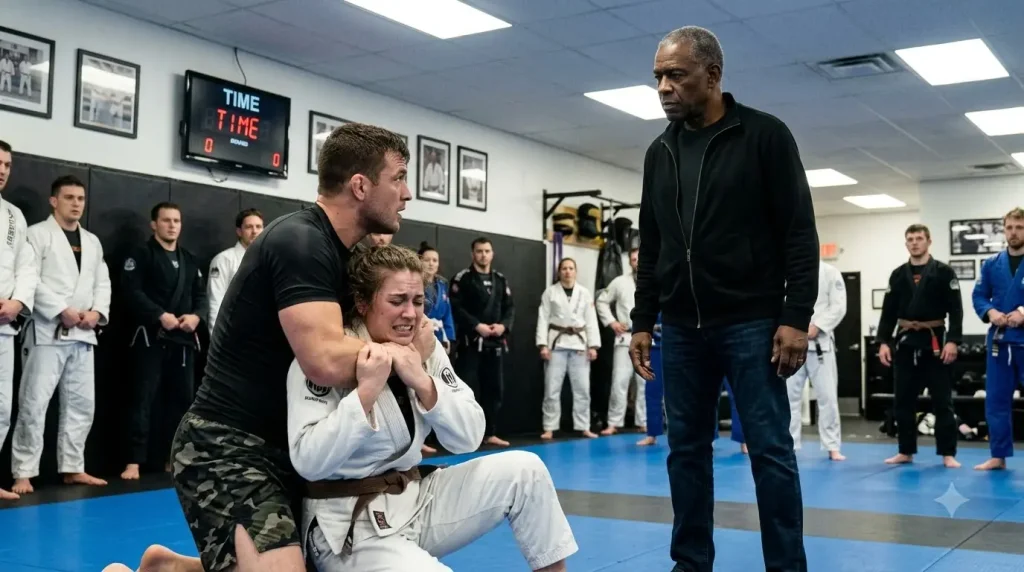
“You held after time.”
“Yes.”
“After the coach called stop.”
“Yes.”
“After she tapped.”
Evan looked away.
“Yes.”
“That is not ‘too long.’”
Elena continued:
“That phrase makes it sound like an error in duration.”
“What was the actual error?”
Evan stared at the floor.
“I decided I wasn’t finished.”
There.
Elena nodded.
“After whose authority ended the exchange?”
“The timer.”
“And?”
“Coach.”
“And?”
“Maya.”
“Three stop signals.”
“Yes.”
“Which one should have been enough?”
Evan answered quietly:
“The first.”
They spent weeks examining why he kept going.
The answer was not that Evan enjoyed hurting people.
He did not.
It was more uncomfortable.
He hated unfinished dominance.
If an opponent escaped him, he felt exposed.
If a round ended before he completed what he started, he experienced it as loss.
He had built identity around control.
Stopping because someone else decided the moment was over felt, emotionally, like submission.
Elena said:
“You understand the irony.”
Evan laughed bitterly.
“Yes.”
A submission grappler who struggled to submit to boundaries.
That was exactly it.
Maya returned after two weeks.
No dramatic entrance.
No applause.
She hated when people applauded anyway.
Three students did.
She stared until they stopped.
Her first round was with a purple belt named Rachel Kim.
Before they started, Rachel asked:
“Anything you want me to avoid?”
Maya thought.
“Neck attacks today.”
“Done.”
They trained.
No neck attacks.
No explanation required.
Afterward, Maya sat beside Daniel.
“You changed the board.”
Daniel looked toward the wall.
A new rule had been added.
TIME, TAP, OR STOP — RELEASE IMMEDIATELY.
Below it:
YOUR PARTNER DOES NOT NEED TO EARN THE RIGHT TO END AN EXCHANGE.
Maya nodded.
“That’s better.”
Daniel said:
“I should’ve had it before.”
“Maybe.”
He looked at her.
“That sounded like forgiveness.”
“It wasn’t.”
Daniel laughed.
“Fair.”
Three months later, Evan requested reinstatement.
Daniel met with him.
Maya was not required to attend.
She chose not to.
That mattered.
This was not her job.
Evan’s return depended on his conduct and the gym’s standards, not whether Maya performed forgiveness.
Daniel asked:
“What changed?”
Evan answered:
“I used to think the rule was release when I recognized the stop.”
Daniel waited.
Evan continued:
“Now I understand the rule is release when the stop happens.”
“Difference?”
“My opinion isn’t required.”
Daniel nodded.
Good.
Evan returned under restrictions.
No beginner coaching.
No competition-team leadership.
Every round with a coach nearby for the first month.
Some members hated it.
Others welcomed him too quickly.
Maya did neither.
They first saw each other again near the water fountain.
Evan stopped.
“Can I talk to you?”
Maya thought.
“Two minutes.”
He nodded.
“I’m sorry.”
She waited.
“For holding after time.”
“For holding after Coach called stop.”
“For holding after you tapped.”
He swallowed.
“And for arguing about it afterward.”
Maya nodded.
“Thank you.”
Evan continued:
“I don’t expect—”
Maya raised one hand.
“Don’t.”
He stopped.
“You don’t need to tell me you don’t expect forgiveness.”
“I know.”
“That can still become pressure.”
Evan thought.
“You’re right.”
She picked up her bottle.
“Anything else?”
“No.”
“Okay.”
She walked away.
Evan did not ask whether they would ever train again.
Good.
Six months later, Maya chose to.
She approached him during open mat.
“Want a round?”
Evan looked surprised.
“Yes.”
Then:
“Neck attacks okay?”
Maya considered.
“Yes.”
They trained.
Five minutes.
Hard.
Technical.
Clean.
Evan caught a choke with forty seconds left.
Maya defended.
Then tapped.
Evan released before her second tap landed.
Immediate.
Maya sat up.
Evan looked nervous.
“You okay?”
“Yes.”
“That release fast enough?”
Maya stared.
Then smiled.
“Don’t ruin it.”
He laughed.
“Right.”
Progress.
Not erasure.
Marcus watched occasionally.
Never coached unless asked.
One afternoon, a teenage student approached him.
“You’re Maya’s dad?”
“Yes.”
“You really taught Army combatives?”
“Yes.”
“Could you have beaten Evan that night?”
Marcus looked toward the mat.
“Maybe.”
The teenager smiled.
“I knew it.”
Marcus shook his head.
“You missed the point.”
“What?”
“If Evan only needed to let go because someone stronger walked onto the mat, then what happens when nobody stronger is there?”
The teenager stopped smiling.
Marcus continued:
“The rule cannot depend on fear.”
“If you tap, your partner lets go because you tapped.”
“Not because your father might be dangerous.”
The student nodded.
That was closer.
Years passed.
Maya finished her doctorate in physical therapy.
She specialized in combat-sports rehabilitation.
Her clinic treated wrestlers, judo athletes, boxers, BJJ competitors, and people returning after serious injuries.
She became known for one question.
Before pushing a patient harder, she asked:
“Do you want encouragement or information?”
Some patients chose encouragement.
Some wanted the numbers.
Some wanted a minute.
Maya learned that good coaching was not passive.
Boundaries did not mean nobody challenged anyone.
They meant challenge had context.
Consent.
Exit.
A patient could say:
“One more.”
Or:
“Enough.”
Both mattered.
Evan continued competing.
Never became world champion.