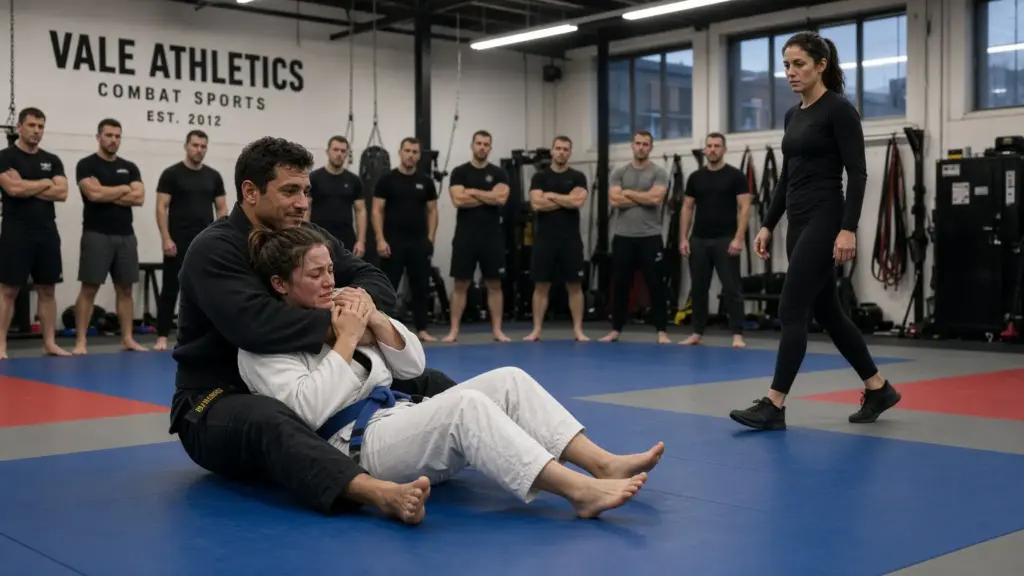
“It does.”
Marcus waited.
Daniel said, “It explains why we let you hold too much informal authority for too long.”
Marcus stared at him.
That sentence hurt more than the suspension.
Not because it erased his work.
Because it reclassified some of what he had considered leadership.
He left without another word.
Claire heard about the meeting secondhand.
She had not attended.
She had refused when Daniel asked.
“This is not my complaint,” she had said.
“You witnessed it.”
“I gave you a statement. That is enough.”
“I thought your perspective might help.”
“It already helped too much.”
Daniel had frowned.
“What does that mean?”
“It means everyone searched my name. Now people listen because they know I held a title.”
“That doesn’t make your point wrong.”
“No. But it creates a new danger.”
“What danger?”
“That the next person who says ‘release her’ gets ignored because she doesn’t have my history.”
Daniel thought about that for the rest of the week.
Hannah did not return during Marcus’s suspension.
She trained once at another gym and left halfway through class.
Nothing bad happened.
That was almost worse.
A senior student paired with her. He asked what pace she wanted. She said light. He stayed light. She tapped to an armbar. He released instantly.
Normal.
The entire round was normal.
Hannah sat in her car afterward and cried.
Not because she was afraid.
Because normal made Southpoint’s failure impossible to excuse.
She had spent days asking whether she had overreacted.
Then one ordinary round in another room answered the question without drama.
She told Priya later.
Priya replied, “Do you want to switch gyms?”
Hannah almost said yes.
Instead, she asked, “Do you think Southpoint can change?”
Priya took a long time to answer.
“I think people there want to change right now.”
“That’s not what I asked.”
“I know.”
Another pause.
“I don’t know.”
Hannah appreciated the honesty.
She returned to Southpoint the following Monday, not to train but to attend the member meeting.
More than fifty people came.
Daniel had expected twenty.
The chairs filled quickly, so many members sat along the edge of the mat.
Claire stood near the back.
She had planned to leave after saying hello to Hannah.
Hannah asked her to stay.
“Not as the champion,” Hannah said.
Claire nodded.
“As what?”
“As the person who was there.”
So she stayed.
Daniel began by admitting the owners had failed to maintain a functioning safety system.
He did not mention Marcus first.
He mentioned governance.
“For years, we let seniority substitute for accountability. We treated experience as if it automatically produced good judgment. We had policies nobody could name, a complaint process nobody trusted, and no clear line between helping the gym and controlling the gym. That is on ownership.”
A member raised his hand.
The Black Belt Smirked, “This Mat Isn’t for You” — Then a Calm Stranger Stepped Forward
“Are you banning Marcus?”
Daniel shook his head.
“We have not finished the review.”
Someone else called out, “Why not? We saw the video.”
Another voice answered, “Because one video should not become the new version of mob rule.”
The room began talking at once.
Daniel raised a hand.
“We are not replacing one informal power system with another. We are documenting what happened. We are interviewing people. We are giving Marcus a chance to respond. Then we will make a decision based on written standards.”
Priya asked, “What happens if the standards were weak?”
“Then we own that and still decide what conduct is compatible with membership.”
A purple belt named Leon spoke next.
“I want to say something unpopular.”
The room quieted.
“Marcus helped me when I first came here. I was broke. He covered two months of dues. He drove me to tournaments. He spent hours fixing my takedowns. I am not saying that excuses what happened. I’m saying if we turn him into a cartoon villain, we’re going to miss why people trusted him.”
Claire watched several faces change.
This was harder than anger.
Anger wanted simple categories.
Good person.
Bad person.
Safe gym.
Unsafe gym.
Leon continued.
“Some of us defended behavior because the same person had done good things for us. I did that. I heard people complain about hard rounds and assumed they were soft because Marcus had been good to me.”
Priya said quietly, “Thank you.”
Leon nodded.
Hannah raised her hand.
Daniel called on her.
Everyone looked at her.
She almost wished she had not come.
Then she remembered the choke.
Not the pressure.
The silence.
“I don’t need everyone here to hate Marcus,” she said. “I don’t even know him well enough to hate him.”
Nobody moved.
“I need the gym to stop requiring someone to be obviously bad before you believe another person’s boundary was ignored.”
Claire lowered her eyes for a moment.
Hannah continued.
“If someone is kind ninety-nine times and ignores one tap, the tap still matters. If someone is rude ninety-nine times and respects the tap every time, the tap still matters. Can we please make the rule about the action?”
Daniel wrote the sentence down.
The meeting lasted two hours.
By the end, Southpoint had a draft system.
Immediate release on any tap or clear stop signal.
Any member could decline a partner, drill, or round without explanation.
Hard rounds required explicit agreement from both people before starting.
No senior member could assign punitive rounds.
Incidents involving ignored taps, continued contact after stop, or coercion would be documented.
A three-person rotating safety panel would review complaints. At least one panel member had to be outside the highest rank group.
Ownership would review panel decisions quarterly.
Beginners would receive the policies verbally on their first night.
Most importantly, the phrase “we all know the rules” would no longer be accepted as a substitute for actually teaching them.
Someone asked Claire what she thought.
She answered, “Ask Hannah.”
Hannah looked at the document.
“It’s better.”
Daniel waited.
“Better than what?”





