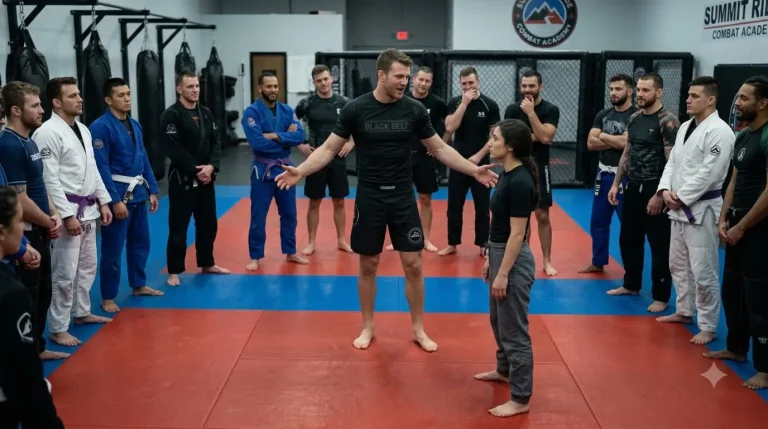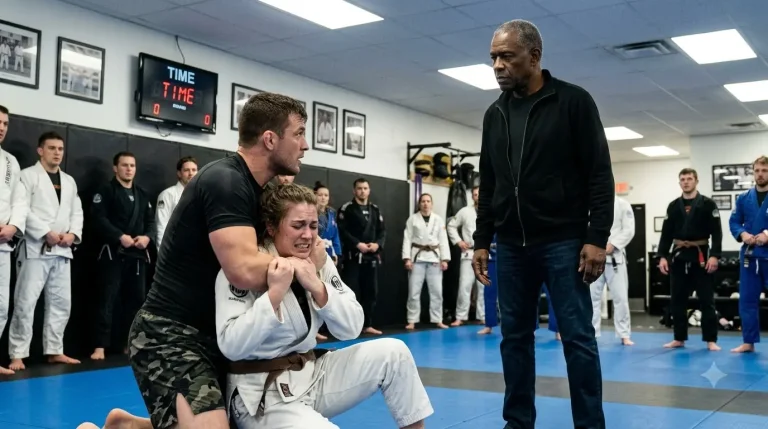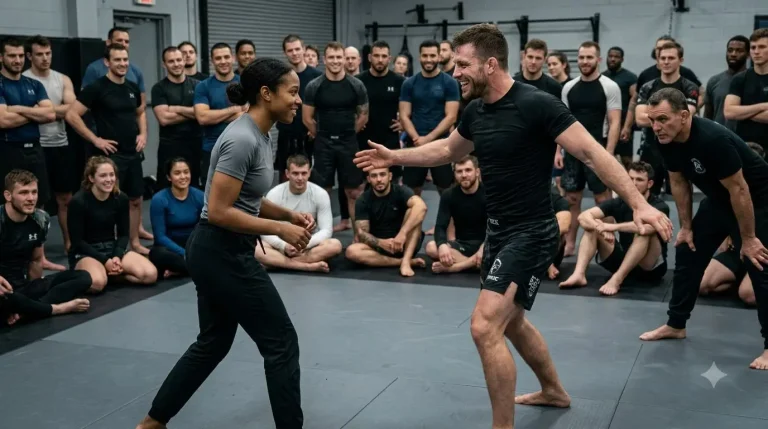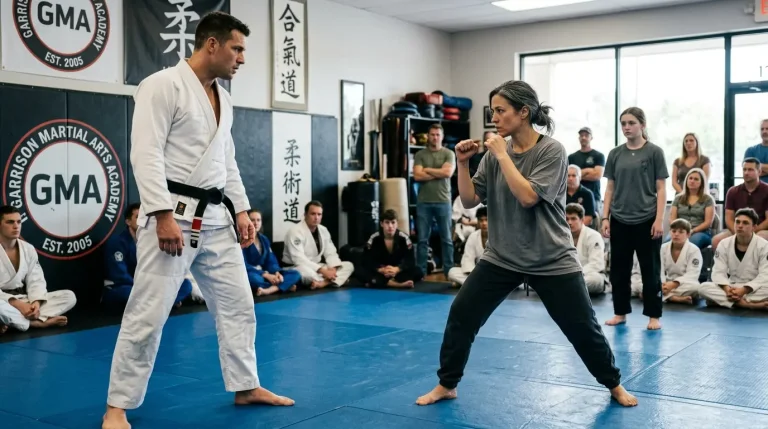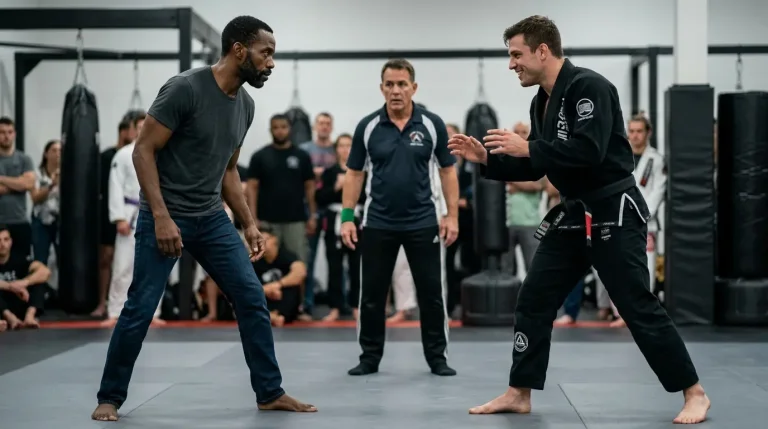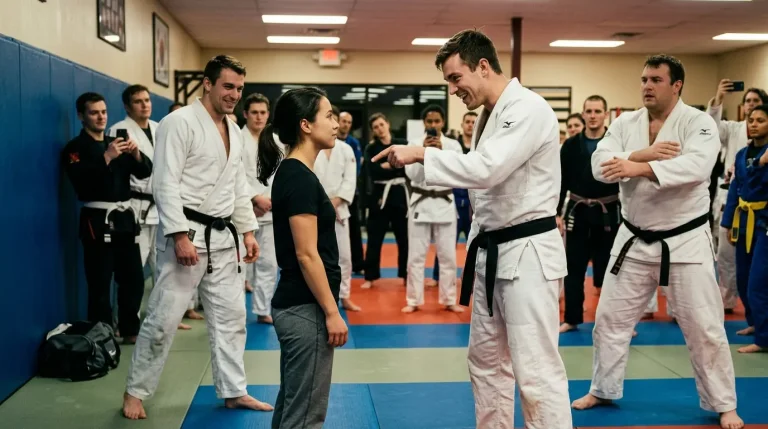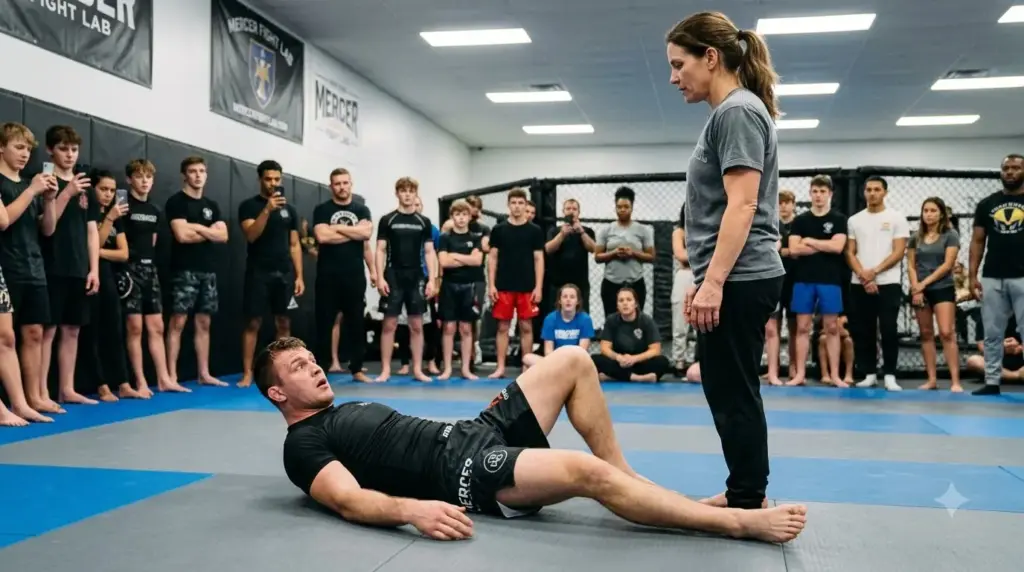
Later, when the gym emptied, Rebecca stood near the old cage.
Tyler joined her.
“You know what’s funny?”
“What?”
“You beating me was probably the best thing that happened to my career.”
Rebecca groaned.
“Please don’t turn me into a motivational quote.”
“I’m serious.”
“I know. That’s worse.”
Tyler smiled.
Then became quiet.
“I thought being champion meant I was the most important person on the mat.”
Rebecca nodded.
“I remember.”
“I didn’t understand that the better you get, the more responsibility you have not to make beginners feel small.”
Rebecca looked toward him.
“You understand now.”
“Most days.”
“That’s all anybody gets.”
He looked at her.
“You ever wish you’d stayed in wrestling?”
She answered honestly.
“Yes.”
He seemed surprised.
Rebecca continued.
“And I’m still glad I took care of my family.”
“Both?”
“Both.”
She smiled.
“Life can hold two truths.”
Tyler nodded.
The next morning, he taught a beginner class.
Twenty students.
White belts.
Awkward feet.
Nervous smiles.
A woman in her forties stood near the back.
Tyler paired people.
When he reached her, she said,
“I’ve never done this before.”
Tyler smiled.
“That’s why it’s called beginner class.”
“I’m probably terrible.”
“You probably are.”
She laughed.
Then Tyler added,
“So was everyone else.”
He demonstrated slowly.
No performance.
No attempt to impress.
No jokes at her expense.
After class, she thanked him.
Tyler watched her leave.
Then he looked toward the center of the mat where, years earlier, he had told Rebecca Cole he would go easy.
People who heard the story usually remembered the fourteen seconds.
The champion falling.
The shocked faces.
The sudden silence.
They liked the reversal.
The arrogant fighter getting embarrassed by the quiet older woman.
Tyler understood why.
But that was never the part that mattered most.
The important moment had happened before the timer started.
Rebecca said no.
Twice.
Tyler ignored her because his pride mattered more to him than her choice.
Everything after that was consequence.
He did not become better because someone proved he was less dangerous than he imagined.
He became better when he finally understood that strength did not give him more rights over other people.
It gave him more responsibility.
Years later, when young fighters became too impressed with their own belts, Tyler never showed them the video.
He gave them simpler advice.
“If somebody says no to a round, respect it.”
Sometimes a teenager would ask,
“Why?”
Tyler would smile.
Because somewhere in Kansas City there was still a forty-something school counselor with an old knee injury, a quiet voice, and enough experience to turn a champion’s confidence upside down in fourteen seconds.
But Tyler never said that.
He simply answered,
“Because you don’t need to know what somebody can do before you decide to respect them.”
And whenever someone jokingly asked whether he still told women he would go easy, Tyler would shake his head.
“No.”
Then he would smile.
“I learned to ask what pace they want.”
That lesson had cost him fourteen seconds.
He considered it a bargain.